

Backup Power: 8 kW Solar, Two Powerwalls and a 25 kW Natural-Gas Generator
Last verified: September 8, 2026
A rebuild is the cleanest time to coordinate solar, batteries, a standby generator, the gas service and a 200-amp electrical panel. The system below layers quiet, instant battery backup over a generator that can carry the house through a longer outage.
The Big Picture
Layered home backup — concept cutaway
Select the artwork to open the full-size version; on a phone, pinch to inspect the labels.
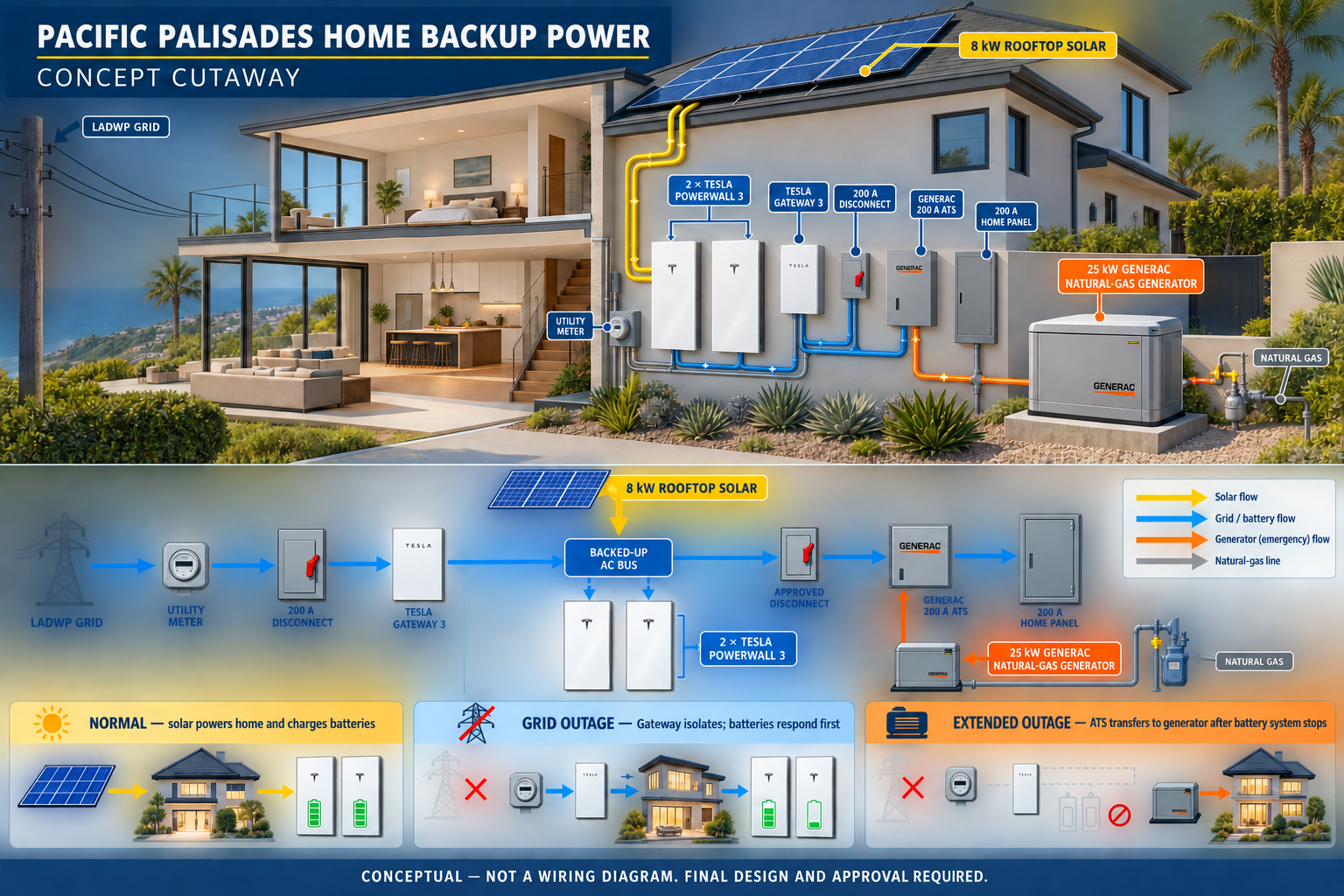
How the three layers work
Solar serves the home and charges the batteries; the grid fills any gap.
The Tesla Gateway isolates the home and the Powerwalls respond immediately. Solar can continue charging them when conditions allow.
If charge gets low or demand exceeds the batteries, the separate ATS detects loss of its source and transfers the home to the generator.
The compatibility detail a bid must get right
Tesla’s published arrangement places the Powerwall system between the utility meter and the generator transfer switch. The Generac ATS is downstream. The systems operate independently: there is no Tesla-to-Generac control connection, and the generator does not charge the Powerwalls.
That sequencing matters. It lets Powerwall respond before the generator sees an outage, while preserving a separate generator path after the battery system stops supplying the downstream ATS. The installer must commission the controls for this third-party transfer-switch arrangement.
Tesla: Combining Systems with Powerwall →What the Numbers Mean
8 kW solar + two Powerwall 3 units
- 8 kW solar is the array’s DC nameplate rating, not guaranteed output. Roof orientation, shade, weather and curtailment change production.
- Two Powerwall 3 units provide 27 kWh of nominal stored energy in total. Available backup time depends entirely on the loads being run.
- Powerwall output is configurable and the equipment, breakers, conductors and backed-up loads must be designed together. “Whole home” does not mean every large load can run at once.
25 kW generator; 200 A transfer switch
This concept specifies a 25 kW Generac natural-gas generator. The 200 A label belongs to the service, disconnect, home panel and Generac automatic transfer switch — it is not the generator’s output. The electrician should still confirm the 25 kW selection against the load calculation, motor-starting demands and any automatic load management.
The gas contractor must also verify that the meter, regulator and piping can supply the selected generator while the home’s other gas appliances are operating. The generator needs a compliant outdoor pad, exhaust clearances and service access.
Example Generac 200 A downstream ATS → Generac 25 kW standby generator →Before Anyone Builds It
Ask for one coordinated electrical package
- A load calculation identifying essential and managed loads, including air conditioning, pumps, cooking, EV charging and other large equipment.
- A stamped or approved single-line diagram showing the meter, Gateway, batteries, disconnecting means, ATS, generator and panel in the correct order.
- Tesla-certified design and commissioning for the Powerwall-plus-generator arrangement.
- Generator model, kW rating, fuel-use table, sound data, siting plan and gas-pipe calculation.
- LADBS permits and inspections, LADWP solar/storage interconnection, and LADWP engineering approval for the generator and transfer switch.
Official approvals and references
LADWP requires customer-owned emergency or standby generator installations to be reviewed by its engineering staff. The submittal includes the project address, a single-line diagram, service planning information and the transfer-switch specification sheet.
LADWP generator and transfer-switch request → LADWP solar and battery interconnection →LADWP Connection Center: (213) 367-6937. For Palisades rebuild coordination: PalisadesRebuild@ladwp.com.